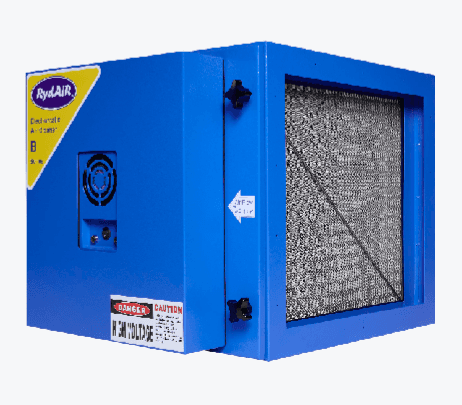
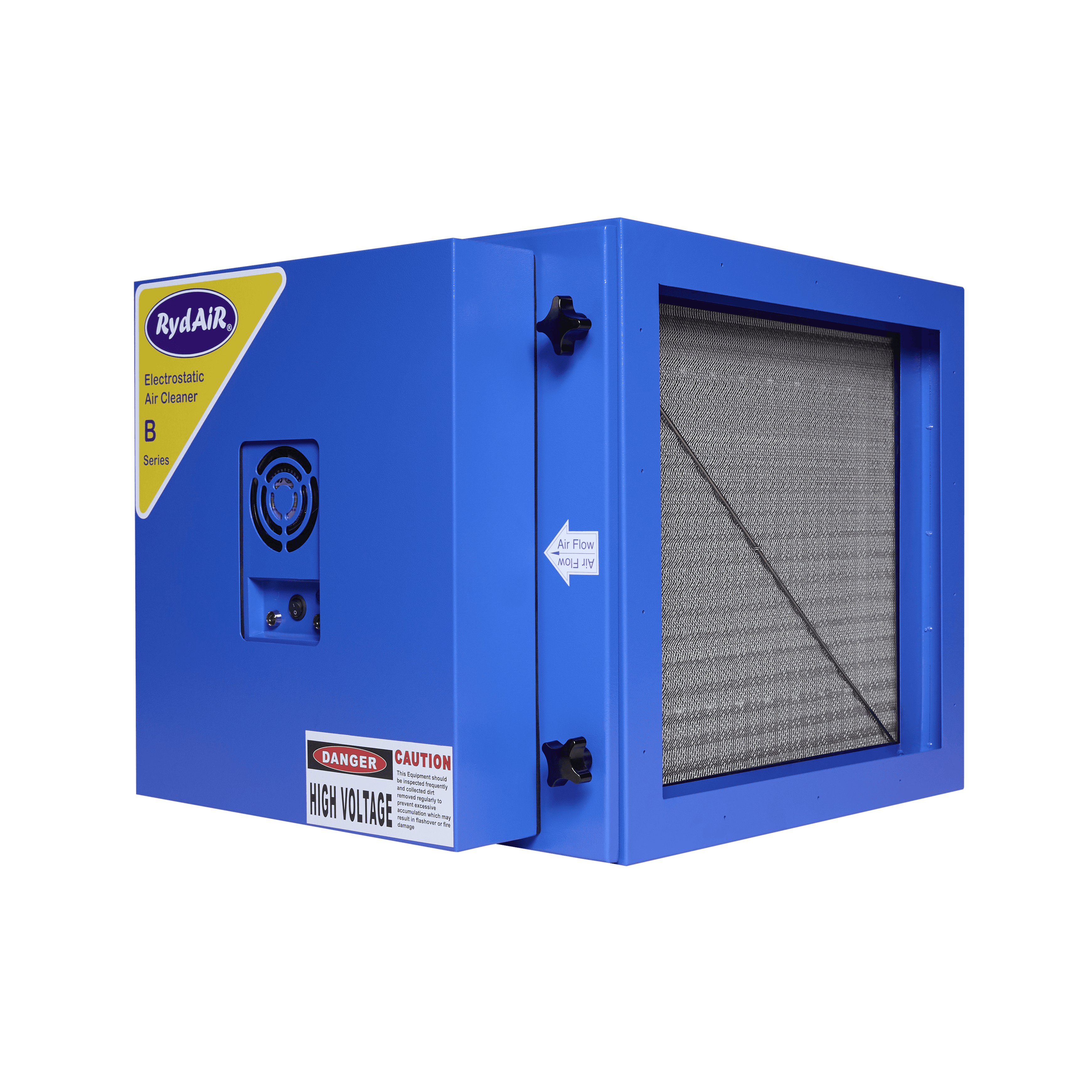
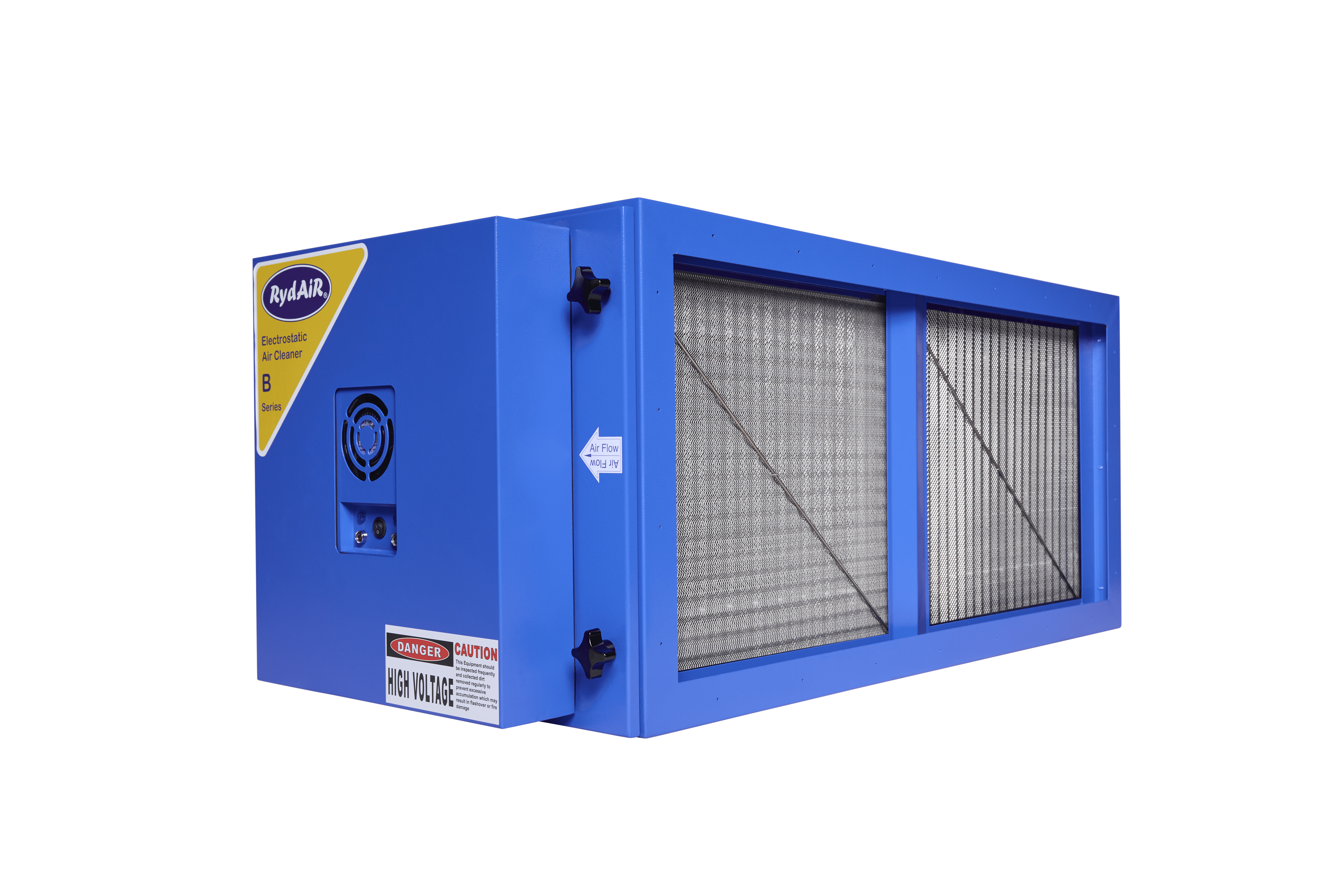
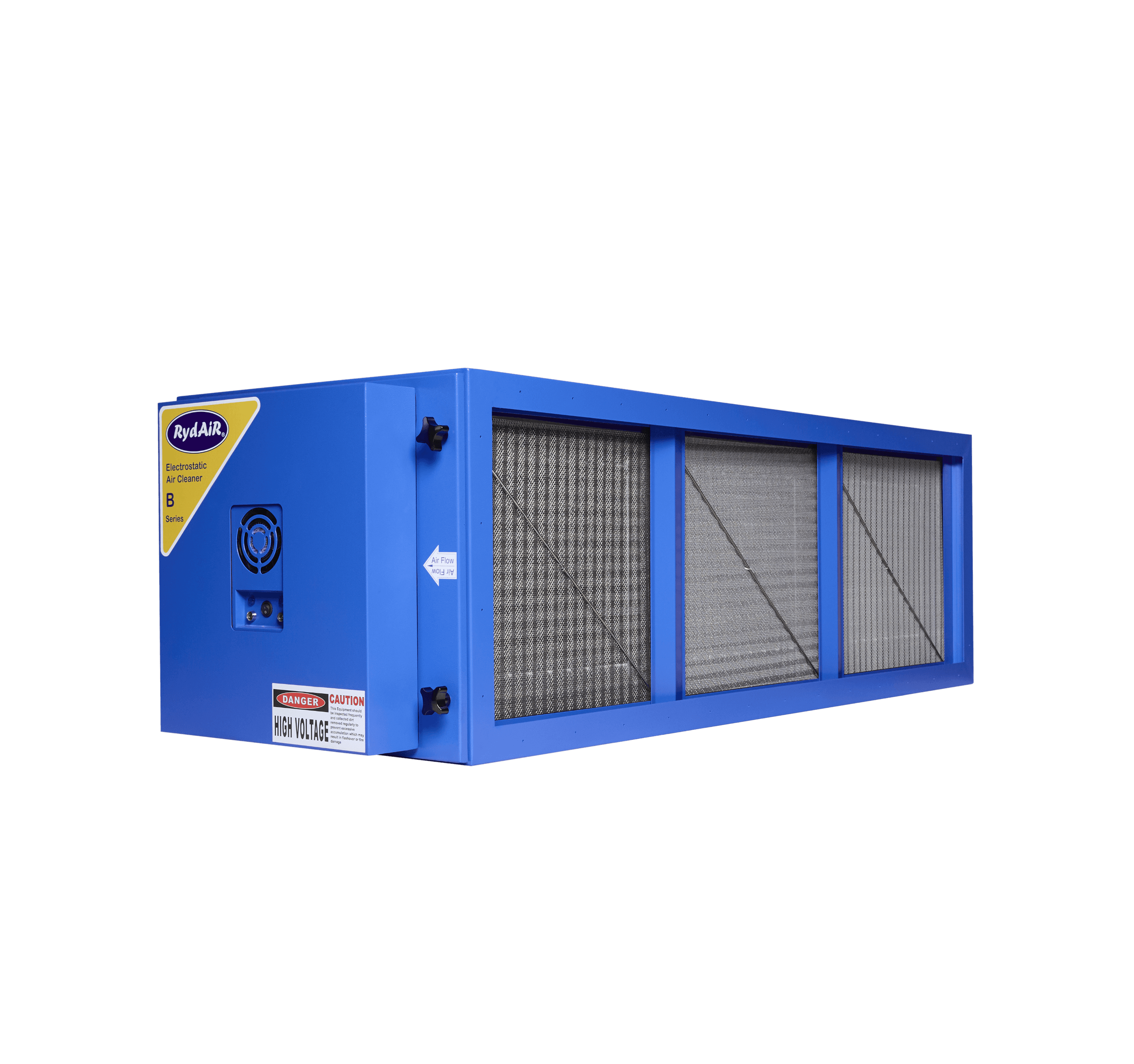
EXM Monitored ozone odour control range
Twin-monitored ozone odour control for commercial kitchen extract. The EXM measures the air to ozone concentration inside the extraction duct and the ozone leaving the system at discharge, and sets production from both readings. When the discharge monitor reaches its setpoint, ozone production is reduced to suit, so the treatment stays effective without pushing unused ozone into the air outside. The factory setting is 0.05 ppm with adjustment down to 0.025 ppm, which lets the discharge be set against the conditions at your particular site. Browse our other ozone solutions: EX20 & EX40 and EXS200 & EXS400.
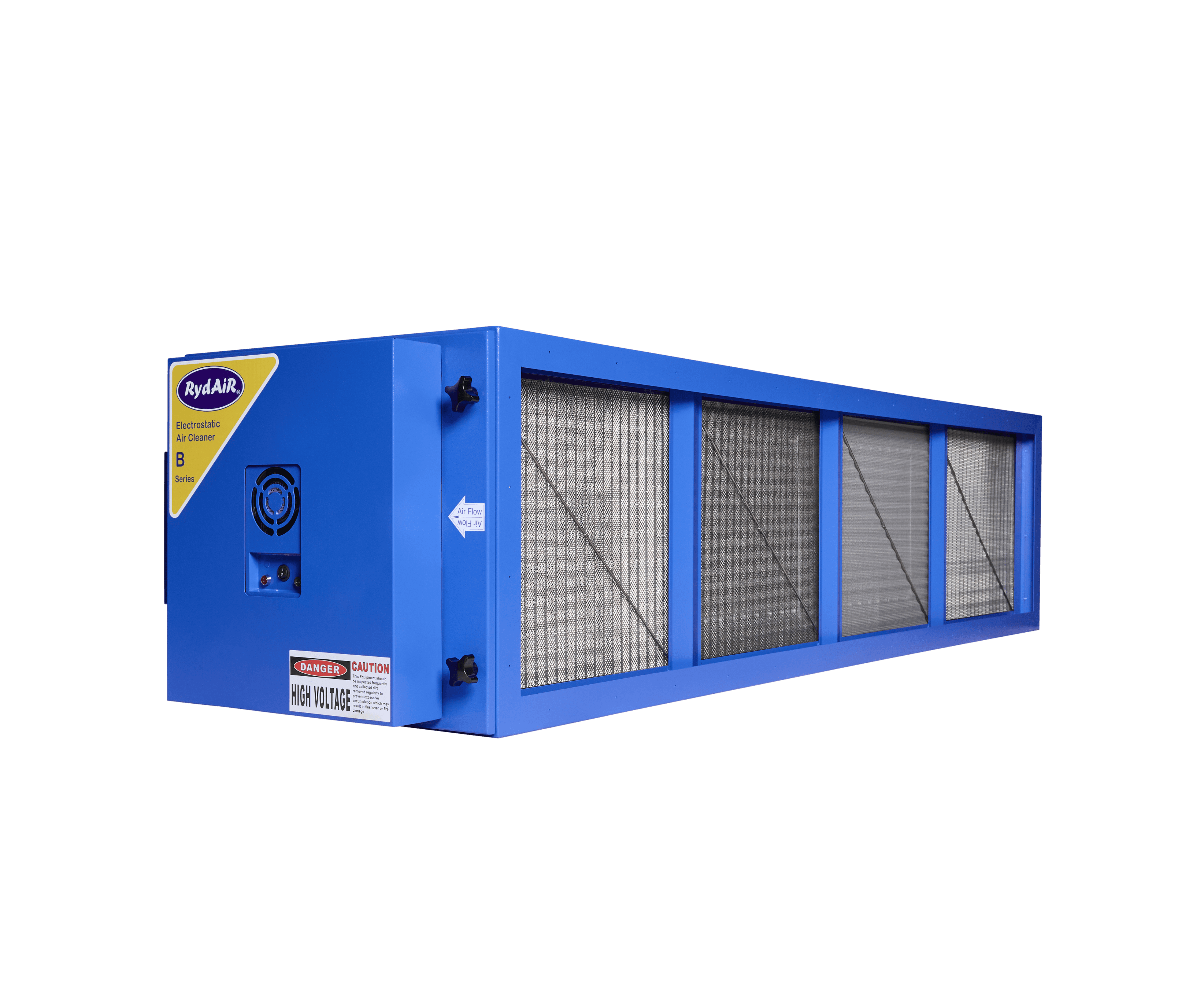
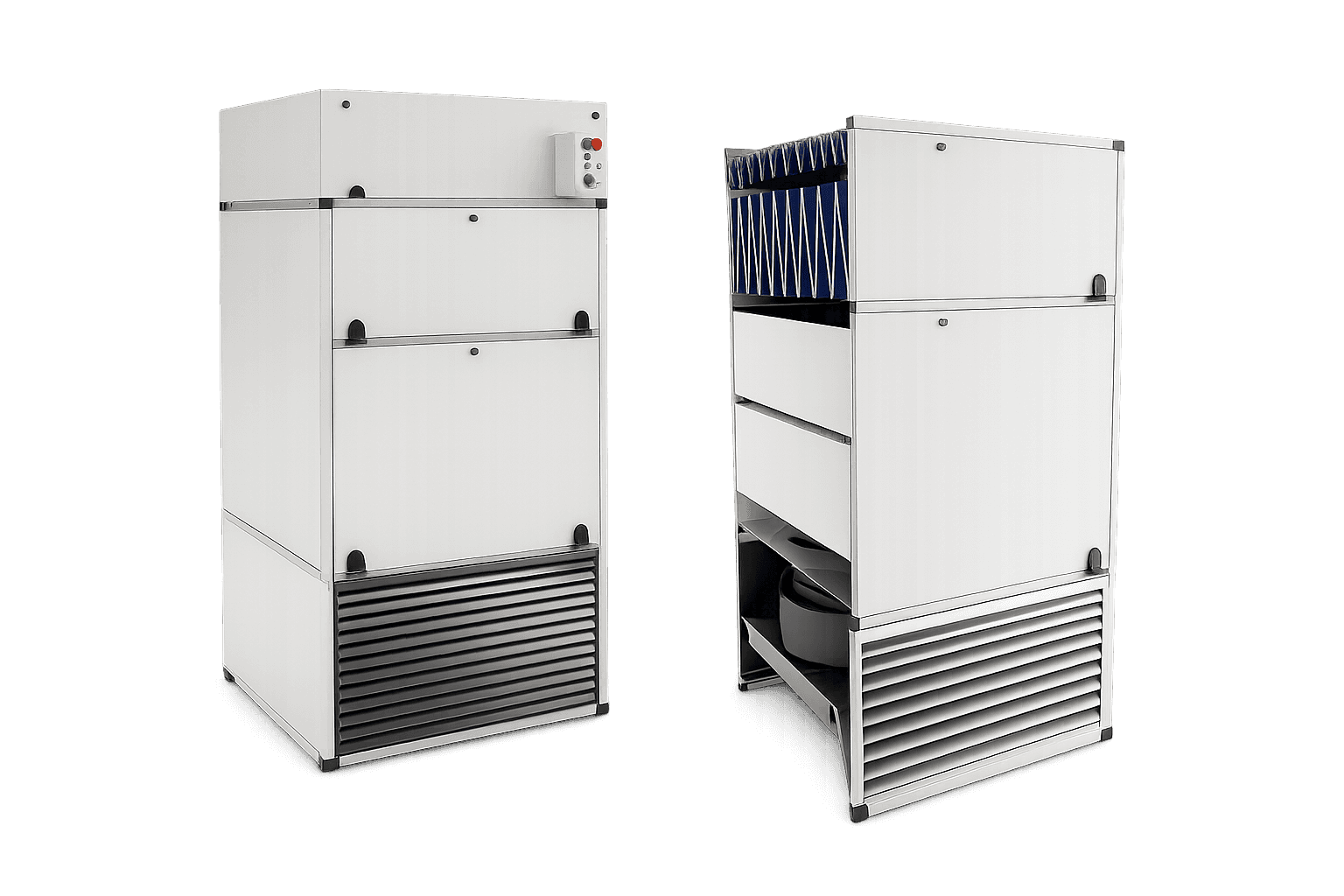
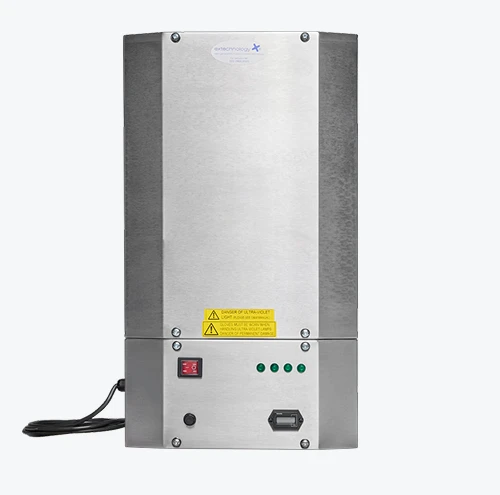
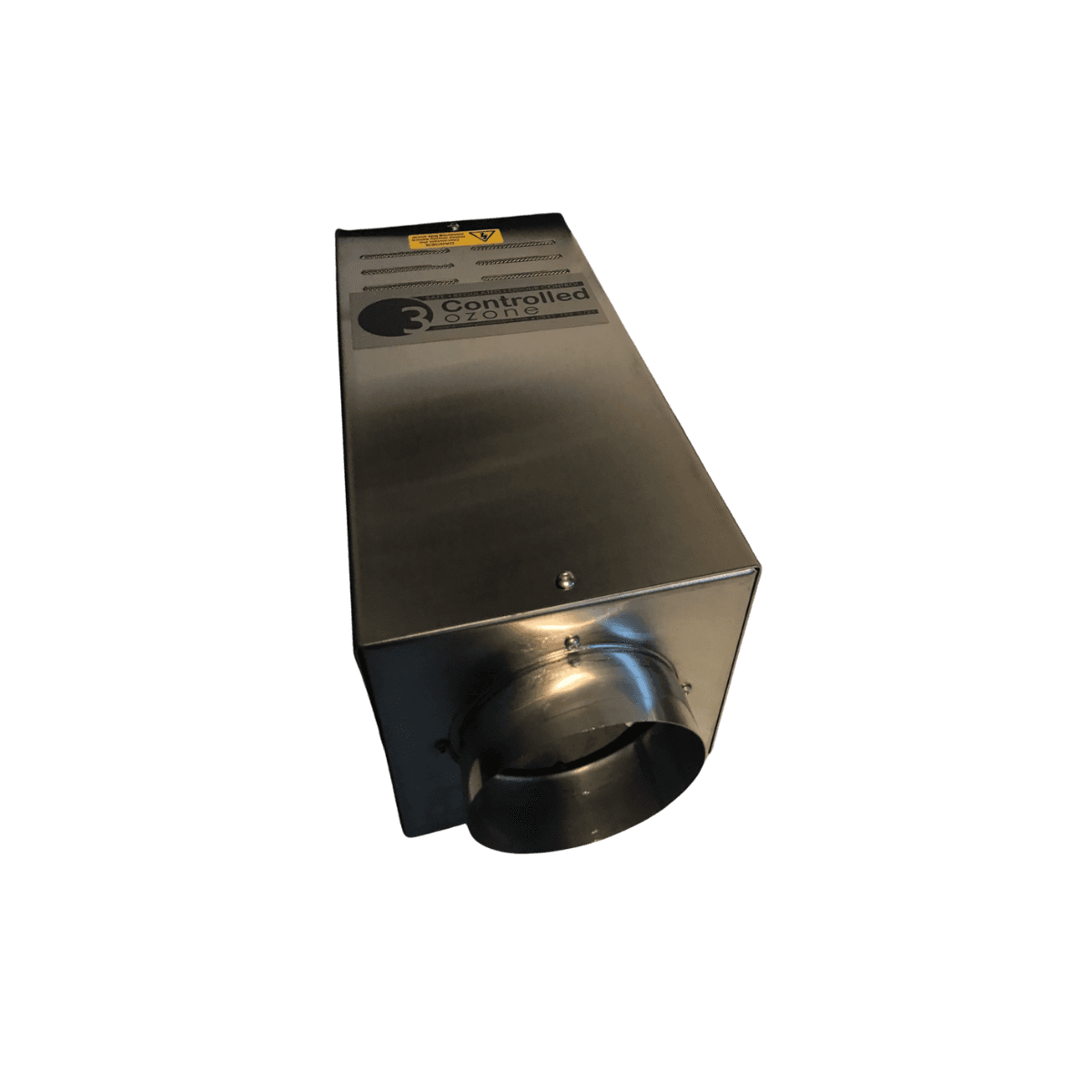
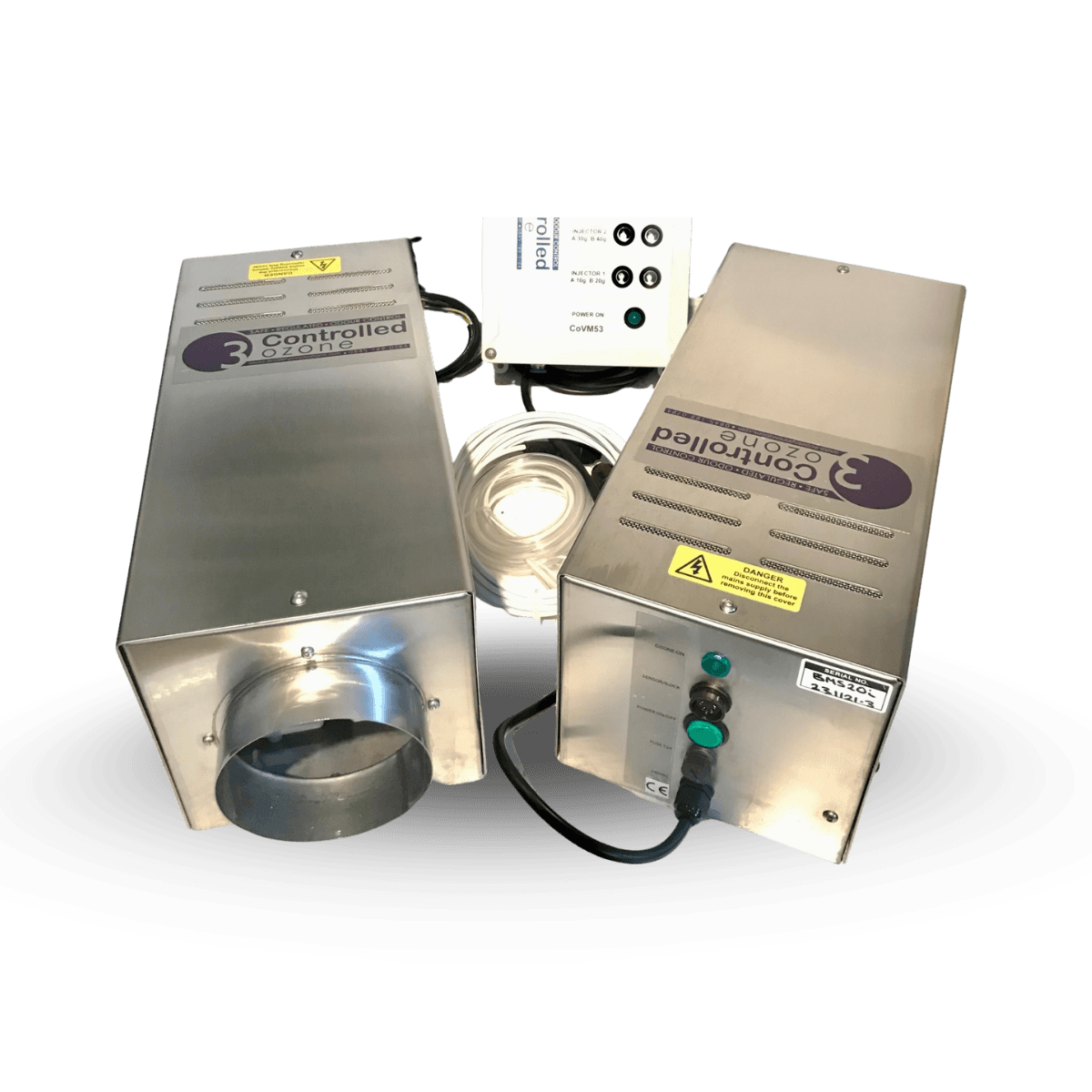
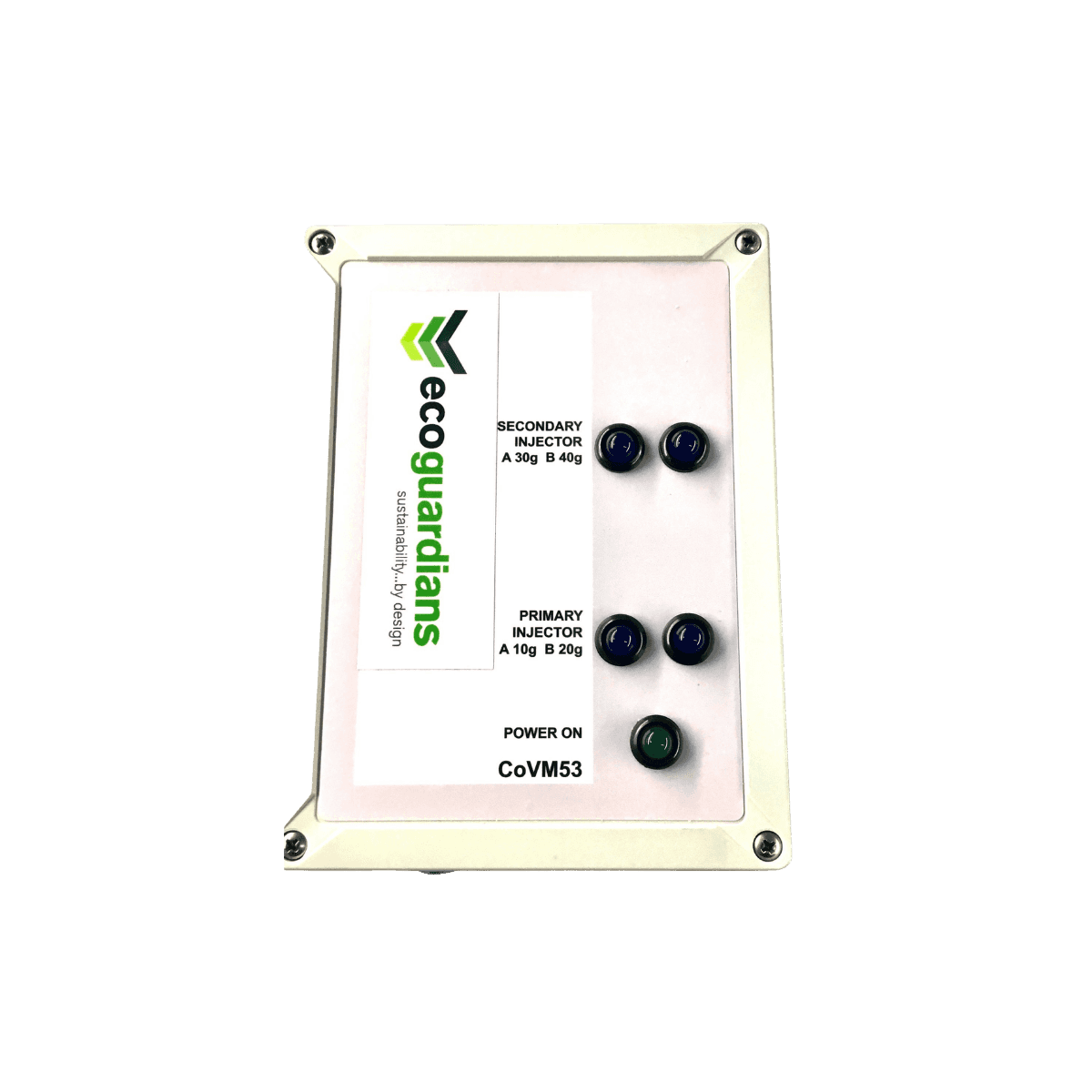
Supplied as injectors, control panel and ozone monitor. The EXM400 is configured as two 20 g/hr injectors. Discharge monitor factory set at 0.05 ppm, adjustable down to 0.025 ppm. Monitor cabinet 200L x 150W x 95H, weatherproof, detection level adjustable to meet local guidelines. Duct connection 100mm circular. Electrical supply 240V, 1-ph, 5A per injector.
" width="21px"><path d="M 0 0 L 21 0 L 21 21 L 0 21 Z" fill="transparent" height="21px" id="tIGsqpkGV" width="21px"/><g fill="transparent" height="19.250046675655664px" id="eDoX5ejok" transform="translate(0.809 0.875)" width="19.322420584113388px"><path d="M 13.737 3.762 L 10.281 0.262 C 9.961 -0.051 9.463 -0.088 9.1 0.175 C 8.886 0.318 8.751 0.552 8.734 0.809 C 8.717 1.066 8.82 1.316 9.012 1.487 L 11.025 3.5 L 0.875 3.5 C 0.392 3.5 0 3.891 0 4.375 C 0 4.858 0.392 5.25 0.875 5.25 L 11.025 5.25 L 9.012 7.262 C 8.82 7.433 8.717 7.683 8.734 7.94 C 8.751 8.197 8.886 8.431 9.1 8.575 C 9.463 8.837 9.961 8.8 10.281 8.487 L 13.737 4.987 C 13.909 4.83 14.007 4.607 14.007 4.375 C 14.007 4.142 13.909 3.919 13.737 3.762 Z" fill="rgb(0, 0, 0)" height="8.749080456872285px" id="MNgukjE2J" transform="translate(5.316 5.25)" width="14.006771074683456px"/><path d="M 11.441 17.5 L 9.691 17.5 C 5.341 17.5 1.816 13.974 1.816 9.625 C 1.816 5.276 5.341 1.75 9.691 1.75 L 11.441 1.75 C 11.671 1.747 11.892 1.652 12.053 1.488 C 12.218 1.326 12.312 1.106 12.316 0.875 C 12.312 0.739 12.282 0.606 12.228 0.481 C 12.078 0.184 11.773 -0.002 11.441 0 L 9.603 0 C 4.287 0.012 -0.012 4.331 0 9.647 C 0.012 14.963 4.331 19.262 9.647 19.25 L 11.441 19.25 C 11.671 19.247 11.892 19.152 12.053 18.988 L 12.228 18.769 C 12.282 18.644 12.312 18.511 12.316 18.375 C 12.316 17.892 11.924 17.5 11.441 17.5 Z" fill="rgb(0, 0, 0)" height="19.250046703371858px" id="ebPCPTRgK" transform="translate(0 0)" width="12.315650398349801px"/></g></g></svg>)
" width="15px"><g fill="transparent" height="15px" id="NW99cfymD" width="15px"><path d="M 1.53 15 C 0.685 15 0 14.315 0 13.47 L 0 1.53 C 0 0.685 0.685 0 1.53 0 L 13.47 0 C 14.315 0 15 0.685 15 1.53 L 15 13.47 C 15 14.315 14.315 15 13.47 15 Z" fill="transparent" height="15px" id="sghUgfy7B" stroke-dasharray="" stroke-linecap="round" stroke-linejoin="round" stroke-width="1" stroke="rgb(0, 0, 0)" width="15px"/><path d="M 0 8.273 L 0 3.423 M 0 1.141 L 0 0" fill="transparent" height="8.272560810461272px" id="aFonZ2AEa" stroke-dasharray="" stroke-linecap="round" stroke-linejoin="round" stroke-width="1" stroke="rgb(0, 0, 0)" transform="translate(2.366 3.364)" width="1px"/><path d="M 0 1.141 C 0 0.511 0.511 0 1.141 0 C 1.771 0 2.282 0.511 2.282 1.141 C 2.282 1.771 1.771 2.282 1.141 2.282 C 0.511 2.282 0 1.771 0 1.141 Z" fill="transparent" height="2.2817073170731703px" id="SpGnR02jz" stroke-dasharray="" stroke-linecap="round" stroke-linejoin="round" stroke-width="1" stroke="rgb(0, 0, 0)" transform="translate(1.225 4.505)" width="2.2817073030487336px"/><path d="M 0 8.273 L 0 7.045 M 0 4.762 L 0 0" fill="transparent" height="8.27255962185744px" id="dcPUf1EDM" stroke-dasharray="" stroke-linecap="round" stroke-linejoin="round" stroke-width="1" stroke="rgb(0, 0, 0)" transform="translate(5.788 3.364)" width="1px"/><path d="M 0 1.141 C 0 0.511 0.511 0 1.141 0 C 1.771 0 2.282 0.511 2.282 1.141 C 2.282 1.771 1.771 2.282 1.141 2.282 C 0.511 2.282 0 1.771 0 1.141 Z" fill="transparent" height="2.2817073170731845px" id="Oy3T0WrtA" stroke-dasharray="" stroke-linecap="round" stroke-linejoin="round" stroke-width="1" stroke="rgb(0, 0, 0)" transform="translate(4.648 8.126)" width="2.281707317073142px"/><path d="M 0 8.273 L 0 3.423 M 0 1.141 L 0 0" fill="transparent" height="8.272560810461272px" id="CKHlAiOwn" stroke-dasharray="" stroke-linecap="round" stroke-linejoin="round" stroke-width="1" stroke="rgb(0, 0, 0)" transform="translate(9.212 3.364)" width="1px"/><path d="M 0 1.141 C 0 0.511 0.511 0 1.141 0 C 1.771 0 2.282 0.511 2.282 1.141 C 2.282 1.771 1.771 2.282 1.141 2.282 C 0.511 2.282 0 1.771 0 1.141 Z" fill="transparent" height="2.2817073170731703px" id="tJlqR4p84" stroke-dasharray="" stroke-linecap="round" stroke-linejoin="round" stroke-width="1" stroke="rgb(0, 0, 0)" transform="translate(8.071 4.505)" width="2.281707317073142px"/><path d="M 0 8.273 L 0 5.653 M 0 3.371 L 0 0" fill="transparent" height="8.272560233604622px" id="iBgqhA41A" stroke-dasharray="" stroke-linecap="round" stroke-linejoin="round" stroke-width="1" stroke="rgb(0, 0, 0)" transform="translate(12.634 3.364)" width="1px"/><path d="M 0 1.141 C 0 0.511 0.511 0 1.141 0 C 1.771 0 2.282 0.511 2.282 1.141 C 2.282 1.771 1.771 2.282 1.141 2.282 C 0.511 2.282 0 1.771 0 1.141 Z" fill="transparent" height="2.2817073170731703px" id="t6CWUtdIP" stroke-dasharray="" stroke-linecap="round" stroke-linejoin="round" stroke-width="1" stroke="rgb(0, 0, 0)" transform="translate(11.494 6.735)" width="2.281707317073142px"/></g></g></svg>)
" height="16px" id="lHhryXrlg" transform="translate(5.867 7.633)" width="20px"/></svg>)
Trusted by Commercial & Industrial Leaders







Detailed Technical Information, Compliance & Performance Data

Supplied as injectors, control panel and ozone monitor. The EXM400 is configured as two 20 g/hr injectors. Discharge monitor factory set at 0.05 ppm, adjustable down to 0.025 ppm. Monitor cabinet 200L x 150W x 95H, weatherproof, detection level adjustable to meet local guidelines. Duct connection 100mm circular. Electrical supply 240V, 1-ph, 5A per injector.
Understanding System Performance in Real Applications
How it's works
The first stage of control is inside the duct. A variable air pressure switch in the control panel samples extract pressure through a 6mm tube and holds the air to ozone ratio as the cooking load changes, so the concentration is high enough to break down the odour particulate without running the injectors harder than the airflow needs.
The second stage is at the end of the extract. An ozone monitor reads the unused ozone being discharged, and production is reduced when the reading reaches the setpoint. The setpoint is adjustable, so discharge can be matched to what the site and the local conditions require.
Ozone itself is generated by corona discharge from ambient air: the discharge splits oxygen molecules into single atoms, which bind to other oxygen molecules to form ozone. Injected into the canopy plenum or the first duct run, it oxidises the organic particulate carrying the cooking odour, so the smell does not reappear further down the airflow
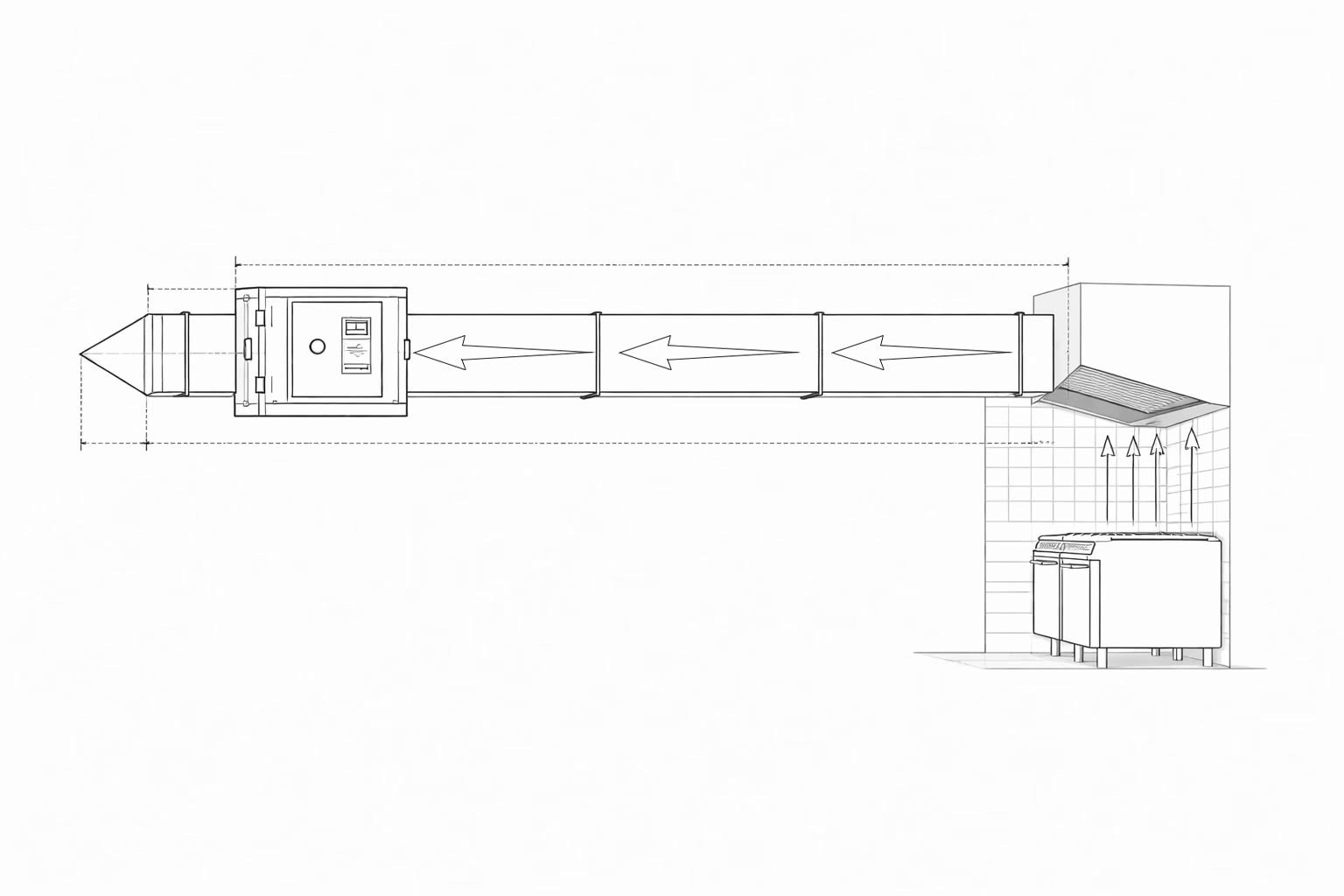
EXM Monitored ozone odour control range
- Notes
on
Application
Designed for sites where the discharge point sits close to occupied premises, windows or air intakes
Commonly specified where planning or an environmental health condition requires odour control that can be demonstrated rather than assumed
Suitable for heavy and variable cooking loads across restaurants, fast food, food production and coffee roasting.
Appropriate as the odour stage alongside grease filtration and a duct cleaning regime, not as a replacement for either.

Is the EXM200 or EXM400 suitable for my type of commercial kitchen?

It is the range to specify where the discharge is the problem: a city-centre site, a flat above the kitchen, a neighbour who has complained, or a consent with an odour condition attached. Up to 1.9 m3/s takes the EXM200 and up to 3.8 m3/s takes the EXM400. Above that, more injectors run from a single panel
Can the EXM200 or EXM400 be used in non-kitchen environments such as factories or industrial premises?
What problems does the EXM200 or EXM400 solve?
Will the EXM200 or EXM400 help with planning approval or environmental health requirements?
Do you work with local authorities, consultants and contractors?
Industries We Design For
Each system is engineered around real-world airflow, contaminant and compliance requirements.