Odour Control
15 Feb 2026
Oil Mist Filtration Systems for CNC & Metalworking: What to Consider
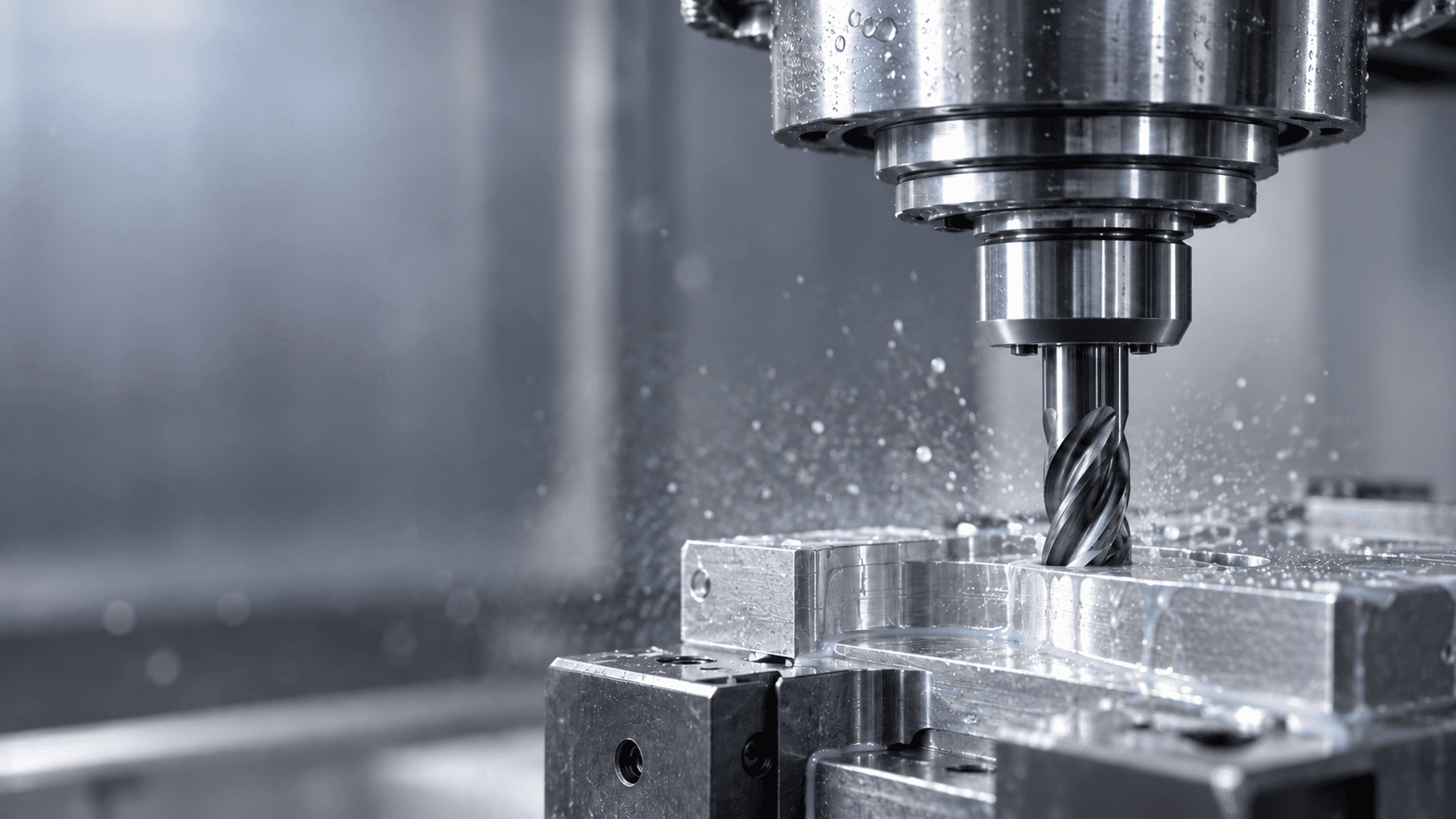
Oil mist filtration systems capture airborne droplets generated by machining and other industrial processes.
Oil Mist Filtration Systems for CNC & Metalworking: What to Consider
Oil mist filtration systems capture airborne droplets generated by machining and other industrial processes. Selecting the right equipment requires an understanding of the fluid being used, the contaminants produced and the airflow needed to collect them effectively.
For contractors, consultants and manufacturing operators, the starting point is the process itself. Different machining operations can produce different combinations of liquid droplets, fine aerosols and particles, so the filtration arrangement should reflect the actual application.
This guide explains how oil mist filtration works, where electrostatic and mechanical filtration may be suitable, and what to consider before specifying equipment.
What Is Oil Mist?
Oil mist consists of small liquid droplets suspended in the air. In metalworking environments, these droplets can be generated when cutting fluids and lubricants are sprayed, agitated or subjected to the movement of machining equipment.
The airborne contamination may include droplets from neat cutting oils or water-mix metalworking fluids, alongside particles generated by the process.
Heated operations can also produce finer aerosols and vapours. These require careful assessment because equipment designed to collect liquid droplets should not automatically be assumed to treat gaseous contaminants.
Understanding the composition of the airstream helps determine which filtration stages are appropriate.
What Does an Oil Mist Filtration System Do?
An oil mist filtration system separates airborne liquid droplets from the air passing through it.
Depending on the equipment and application, this may involve mechanical separation, coalescing filter media, electrostatic collection or a combination of stages.
A typical arrangement may include:
Collection at the machine or process: An enclosure or extraction point captures contaminated air close to where it is generated.
Initial separation: Larger droplets are removed before reaching finer filtration stages.
Fine filtration: Smaller droplets and suitable particulate contaminants are collected.
Drainage or collection: Separated liquid is managed according to the equipment design.
Air discharge: Treated air is directed to the specified discharge point.
Filtration is one part of the overall control system. Extraction design, airflow, machine enclosure and maintenance all influence how effectively contamination is captured.
Mechanical Oil Mist Filtration
Mechanical oil mist filters use physical separation and filter media to collect droplets from the airstream.
Some systems use coalescing media, where smaller droplets combine into larger droplets that can drain or be collected. Other stages may remove particles or provide finer filtration after the initial separation.
When selecting mechanical filtration, consider:
The type of cutting fluid or lubricant.
The size and concentration of airborne droplets.
The presence of solid particles.
The required airflow.
Pressure drop through clean and loaded filters.
Drainage arrangements.
Filter replacement and servicing requirements.
Filter performance changes as equipment becomes loaded. The extraction system must be able to maintain the required airflow within the operating limits of the selected filters.
Electrostatic Oil Mist Filtration
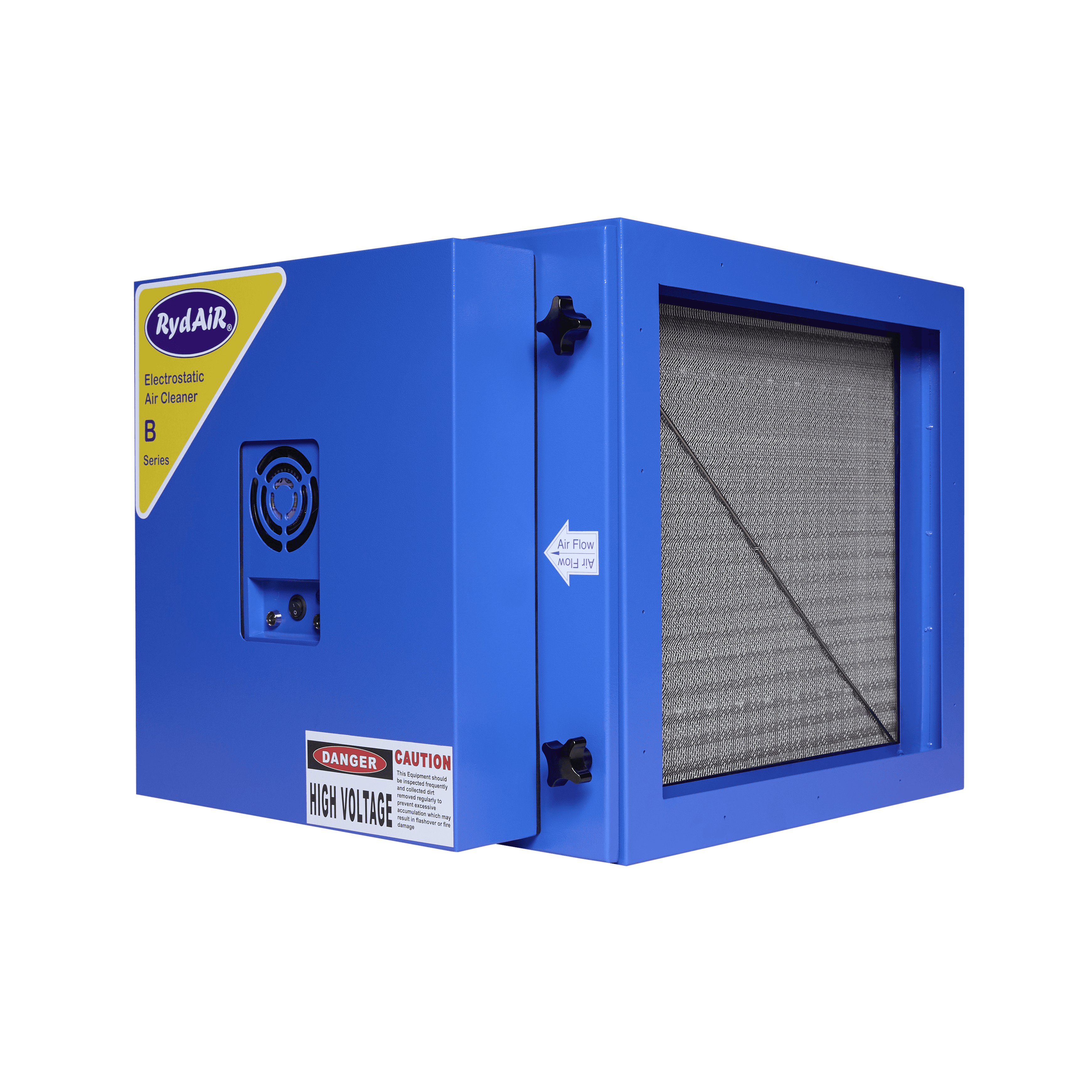
Electrostatic precipitators, commonly called ESPs, use an electrical charge to collect airborne droplets and particles.
As contaminated air passes through the unit, suitable contaminants are charged and attracted to collection plates. The collected material remains within the equipment until it is removed through the unit’s cleaning or drainage arrangements.
ESPs can be suitable for selected oil mist, smoke and fine particulate applications. Many use washable collection cells, providing a reusable filtration stage.
However, suitability depends on the fluid, contaminant load, process conditions and equipment design. An ESP should not be selected solely because the application involves oil mist.
Extechnology supplies a range of electrostatic precipitators, with equipment selection based on the requirements of the individual application.
Mechanical Filters or ESPs: Which Should You Choose?
There is no single filtration technology that suits every machining process.
Mechanical filtration may be appropriate where staged droplet separation and replaceable filter media suit the application. Electrostatic filtration may be appropriate where the contaminant characteristics are suitable and the operator can support regular cell cleaning.
Some applications benefit from combining technologies. Initial separation can reduce the load reaching a finer filtration stage, while additional treatment may be needed for contaminants that the primary equipment does not address.
The decision should consider the complete system: collection, filtration, airflow, servicing and discharge.
Oil Mist Filtration for CNC Machines
CNC machining centres often operate within enclosures, providing an opportunity to extract contaminated air close to the process.
The required extraction rate depends on the machine, enclosure, fluid delivery and operating conditions. Simply fitting a larger filtration unit does not guarantee better capture.
Important questions include:
How effectively is the machining process enclosed?
Where should the extraction connection be positioned?
What airflow is needed during operation?
What happens when the machine door opens?
Does the process produce larger droplets, fine mist, smoke or a mixture?
Can the equipment be accessed safely for cleaning and servicing?
Machine manufacturer information and an assessment of the process should inform the extraction and filtration specification.
Individual Machine Units or a Centralised System?
Oil mist filtration can be arranged around individual machines or connected to a centralised extract system.
Individual Machine Filtration
A dedicated unit serves a single machine or process. This can allow equipment selection and maintenance to be matched to that particular operation.
Space, mounting arrangements, noise, servicing access and the intended air discharge route all need consideration.
Centralised Oil Mist Filtration
A centralised system collects air from several machines and treats it through shared filtration equipment.
The design needs to account for ductwork, airflow balancing, simultaneous machine use and differences between the connected processes. Changes to production equipment may also affect system demand.
The choice depends on the site layout, production requirements and how the operator intends to maintain the system.
Oil Mist, Smoke and Vapour Need Different Consideration
The words “mist”, “smoke” and “vapour” are sometimes used interchangeably, but they describe different forms of contamination.
Mist contains suspended liquid droplets. Smoke generally contains fine particles formed by a heated process. Vapour is a substance present in its gaseous form.
Equipment that collects droplets or particles does not necessarily remove gases. Where vapours or odours are present, the need for additional treatment must be assessed separately.
Activated carbon may be suitable for certain gaseous compounds, but its selection depends on the substance, concentration and operating conditions. It should not be added as a universal solution for every industrial odour.
Maintaining Oil Mist Filtration Systems
Maintenance is essential to sustaining filtration performance and extraction airflow.
Depending on the equipment, servicing may involve:
Cleaning electrostatic collection cells.
Replacing mechanical filter media.
Checking drains and liquid collection points.
Inspecting seals and access panels.
Checking for deposits or restrictions.
Monitoring airflow and pressure drop.
Inspecting fans and associated components.
Service intervals should reflect actual use. A machine operating occasionally may create a different maintenance demand from one running across several production shifts.
Follow the equipment manufacturer’s instructions and review the servicing schedule as operating conditions change.
Information Needed for an Oil Mist Filtration Quote
Providing clear process information helps narrow down suitable equipment.
Useful details include:
Machine type and number of machines.
Machining operations and materials.
Cutting fluid or lubricant details.
Fluid safety data sheets, where available.
Required or existing extraction airflow.
Operating hours and duty cycle.
Air temperature and moisture conditions.
Existing ductwork and fan information.
Available space and maintenance access.
Proposed air discharge arrangement.
Photographs, drawings and existing equipment specifications can also help explain the installation.
Oil Mist Filtration Support from Extechnology
Extechnology provides industrial air filtration systems and individual filtration units for integration into new and existing extract installations.
We work with contractors, consultants and industrial operators to assess suitable filtration options, including electrostatic precipitators and combinations of filtration stages where appropriate.
Our support includes equipment specification, supply, installation guidance and ongoing maintenance.
To discuss oil mist filtration for your application, call 020 7953 9725 or email info@extechnology.com.
Frequently Asked Questions
What is an oil mist filtration system?
It is equipment designed to separate airborne liquid droplets from an airstream. It may use mechanical separation, coalescing media, electrostatic collection or several stages working together.
Can an electrostatic precipitator remove oil mist?
An ESP can collect suitable airborne oil droplets and fine particles. Its suitability must be checked against the fluid, process conditions and contaminant load.
Does oil mist filtration remove vapours?
Droplet and particulate filtration should not be assumed to remove gaseous vapours. The compounds present need to be assessed to determine whether additional treatment is required.
How often should oil mist filters be serviced?
The interval depends on the equipment, fluid, contaminant loading and operating hours. Follow manufacturer guidance and use operating checks to establish a suitable maintenance schedule.
Can oil mist filtration be added to an existing extract system?
It may be possible, subject to an assessment of airflow, fan capacity, pressure drop, ductwork, available space and discharge requirements.



Emergency ESP Replacement Following Restaurant Fire
Emergency ESP Replacement Following Restaurant Fire Project Overview Extechnology was appointed to supply a rapid replacement ESP solution following a fire at a commercial restaurant kitchen. The fire had damaged the existing extraction and filtration equipment, leaving the restaurant unable to operate until the system was replaced. With business downtime directly affecting revenue and day-to-day operations, the project required a fast and straightforward solution that would allow the restaurant to reopen as quickly as possible. As the existing extract system had already been designed around a specific airflow requirement, the replacement ESP equipment needed to provide a like-for-like solution that could integrate easily into the existing setup without unnecessary redesign work or site modifications. The Challenge The restaurant required an urgent replacement of the damaged ESP equipment within a very short timeframe in order to minimise disruption to the business. Key challenges included: Rapid specification and supply of replacement ESP equipment Minimising operational downtime and financial losses Matching the existing airflow and system performance requirements Avoiding unnecessary ductwork or system alterations Supporting a fast-track installation and recommissioning programme With pressure to reopen quickly, maintaining speed throughout specification, processing and delivery was critical to the success of the project. The Solution Extechnology worked closely with the client and installation team to quickly identify a suitable like-for-like ESP replacement based on the existing system airflow and operational requirements. Using the original system information, the replacement ESP unit was selected to maintain the required airflow performance while integrating directly into the existing extraction arrangement. This simplified both specification and installation, avoiding delays associated with redesign or major system modifications. The focus throughout the project was to keep the process straightforward and efficient. Once the system requirements were confirmed, the replacement ESP equipment was rapidly processed and delivered within a short lead time to support the installation programme and help return the kitchen to operation as quickly as possible. Technology Used Like-for-like commercial kitchen Electrostatic Precipitator (ESP) Existing extraction system airflow configuration retained Washable ESP filtration technology for grease and smoke removal Compatible integration with existing ductwork and extraction layout Project Outcomes Rapid turnaround from enquiry to delivery Minimal downtime for the restaurant Fast-track installation and recommissioning Reduced disruption and business losses Successful reopening within a short timeframe Happy client and fully operational kitchen Consultant Notes The replacement ESP equipment was selected to match the airflow and operational characteristics of the original system, allowing the installation to proceed without significant modifications to the existing extract arrangement. By maintaining a like-for-like approach, the project avoided unnecessary complexity and enabled a faster overall delivery and installation programme, helping minimise disruption to the client’s business operations.

Hook, Camden Town
Extechnology delivered an odour control solution to support planning and neighbour acceptance while keeping pressure drops predictable.

Hoxton Hotel, Holborn
High‑efficiency ESP stages with low static and washable cells, supporting reliable operation and simplified servicing for a busy hospitality environment.